It was a hot summer and autumn. This is just a visual for what we all already knew.
LINK: Mount Fuji is still without its iconic snowcap for the first time in 130 years
Haiku, Japan, and the misunderstood
It was a hot summer and autumn. This is just a visual for what we all already knew.
LINK: Mount Fuji is still without its iconic snowcap for the first time in 130 years
Leave it to Issa to give us this slice of life from back in the day.
夕暮や馬糞の手をも菊でふく
yūgure ya ma-guso no te wo mo kiku de fuku[1]
this evening
wiping horse poop from my hand
using a chrysanthemum
—Issa[2]
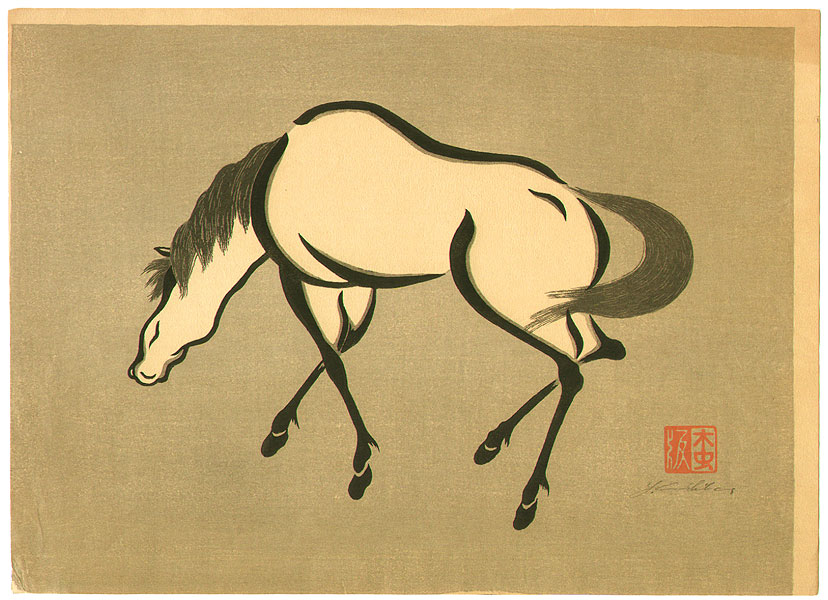
Not a whole lot to say here; what you see is very much what you get. This haiku does actually fit quite well with the entire haikai movement, one of the goals of which was to get away from the lofty images of old poetry and better reflect real life—to be more raw in other words[3]. Even the great Bashō had at least one haiku about animals being animals.
From his epic Oku no Hosomichi trip, Bashō wrote:
蚤虱馬の尿する枕もと
nomi shirami uma no shitosuru makura moto
plagued by fleas and lice
now a horse pissing
near my pillow
Real life, eh?
Having said that, if you want to really try to read something into Issa’s haiku, he could be making some comment on the imperial house, whose crest is a chrysanthemum. If that were the case, I doubt he would be saying he disapproves of them, rather that the military government (the shogunate) is treating them badly.
I somewhat doubt that’s the case here, however. Issa didn’t often make political comments and preferred to focus on the human experience and the humor of everyday life—fitting themes for haikai.
It’s more likely a simpler statement that as beautiful as a chrysanthemum is, it is only a thing and can be used for purposes other than simply admiring. Instead of making a value judgement of poop or flower we should just appreciate them for what they are. The Buddha is just as comfortable sitting in a pile of shit as he is on a quiet mountain.
What do you think?
Chrysanthemum (kiku) is a season word for all of autumn, by the way, which is the season we are currently in according to the traditional calendar.
[Last updated 25 July 2025]
In addition to that, haikai was short for haikai no renga which was a type of renga that emphasized the normal experience of everyday life rather than the court. Renga then was a type of collaborative poetry that was popular at the time. The first verse was 5–7–5, the second 7–7, then subsequent verses went back and forth. Many to most classic haiku we have were actually the first verse of a longer renga. ↩

By the Western calendar that much of the world uses, this year is the year of our lord two thousand and twenty-four. Despite the fact that many places using this calendar don’t believe in that our lord part, this is the calendar that we a mostly stuck with. Blame what you will: colonization, divine influence, manifest destiny, whatever. Point is, this is pretty much the world system at this point, whether we like it or not. At least until the East rises and we all are forced to switch to the Chinese calendar in the future.[1]
In Japan, while they do use the Western calendar the same as everyone else, they also use a more traditional calendar based on the reigns of emperors. Under that system, this year is Reiwa 6 (令和6年).
What the what? Let’s explain.
The Japanese era system (年号 nengō or 元号 gengō) is a system where they give certain names to periods of years. In the past it was a bit different, but in modern times these groups of time are always equal to the reign of the emperor. It’s this modern version of the Japanese Era system that I want to look at.
It started in 1868 for Emperor Mutsuhito. The era name was changed to Meiji (明治). It remained the Meiji Era for all of his life, with every year taking on a number. So 1868 was Meiji 1, 1869 was Meiji 2, and so on.
When his son became emperor in 1912, the era was changed to Taishō (大正) and the entire thing started over, with 1912 being Taishō 1, 1913 being Taishō 2, and so on. And the pattern continued for every subsequent emperor.
There have been five emperors since this new style of the Japanese era system started.
So looking at that list you can see that Reiwa is the era name for the current emperor. Naruhito is 64 now, so we might expect the Reiwa era to be at least 25 years or so, depending on if he abdicates like his father or if he keeps going until he dies like most emperors have done in the past.[2]
So this year is Reiwa 6 and next year will be Reiwa 7.
You might think a perk of being emperor is you get to choose your era name, but no. Being emperor in Japan really is something of a double-edged sword. You get really nice things, including really nice health care, but you have almost no power to do anything and instead have pretty much everything decided for you, including the daily schedule. It’s a job that has historically been described with the term “golden handcuffs”; maybe you can see why.
Instead, the era name is usually chosen by a group of scholars who pour through ancient literature looking for names that have auspicious meanings. Actually they usually pick several name candidates. So far so good. But then things become political. A group of politicians review the list of name candidates, narrowing it down, then the Prime Minister and his Cabinet make the final selection.
The names are usually pretty idealistic. For example, the current era name, Reiwa, means “beautiful harmony”. Let’s see…so far, the Reiwa era has included the COVID pandemic, the assassination of Abe, the attempted assassination of Kishida, and the Noto earthquake. Harmony, it seems, has been a bit elusive so far—but perhaps it’s on the horizon!
There is one more interesting wrinkle to the system. The current practice is that when an emperor dies, he is renamed to his era name. As a result, when you look in history books for 1868–1912, you are much more likely to see references to an Emperor Meiji than to Emperor Mutsuhito. That’s because according to Japanese custom, his name changed to Meiji when he died and now most history books, Japanese and Western alike, use his death name when referring to him.
This trend is even starting to happen with Hirohito, with some of the newest Western history books starting to adopt his death name and calling him Emperor Shōwa—though often with a note mentioning that in life he was known as Hirohito, since the events of the second world war make that name much more well-known world wide.
There are a few Western historians who have been trying to bridge his potential confusing name gap by starting to use both names when referring to past emperors. For example, they might say The Shōwa Emperor, Hirohito. We shall see if this usage catches on or not.
Prior to being standardized in the Meiji Era, Japanese Era names were much more random. Typically an emperor would declare a new one within his first few years,[3] then anytime there was a big disaster or other event they would change the era name yet again, hoping for an improvement in luck. As a result prior to the Meiji era, eras would usually only last a few years, sometimes even less than one.
For example:
Just within a 10 year period, four different era names! This does make Japanese history a challenge sometimes, but you get used to it.
I think most of Japan uses the Western year simply out of convenience. But the government still offically uses the Japanese era system, so any official thing will be using that system, and as a result people are well familiar with both. Usually people have a few key dates memorized that help them easily convert between each system, but for those less familiar, there are plenty of websites that will help. This one for instance.
Just a few differences to expect when this happens: According to Wikipedia, it is the year 4721 or 4722 for China. And of course their traditional year starts in February. ↩
Technically, they are required to remain emperor until death. Akihito had to ask for special permission to abdicate. If memory serves, it took some time before those who decide things decided to allow it. ↩
Or, y’know, his ministers and the people with real power would. Because, again, the emperor usually wasn’t (and isn’t) really allowed to do very much. ↩
What do you hear when you listen to the wind?
I listen
to the wind
and wonder about the future

I was laying at night with the balcony door open. The wind was whipping something fierce. It is starting to get a little cool at night, but it still felt good for now so it stayed open. I could still hear the night insects, but they were much fewer than usual and were being drowned out by the wind.
As I lay there listening to it, I wondered what it was telling me. Long ago when I was in high school, I read Zen and the Art of Motorcycle Maintenance. There is a line in there where the author, Robert Pirsig, claims that the ancient Greeks listened to the wind to predict the future.
I looked up the line. Here it is plus a little extra for context:
“The ancient Greeks,” I say, “who were the inventors of classical reason, knew better than to use it exclusively to foretell the future. They listened to the wind and predicted the future from that. That sounds insane now. But why should the inventors of reason sound insane?”
DeWeese squints. “How could they tell the future from the wind?”
“I don’t know, maybe the same way a painter can tell the future of his painting by staring at the canvas. Our whole system of knowledge stems from their results. We’ve yet to understand the methods that produced these results.”
The book is basically a summation of the author’s attempt to unite Eastern and Western philosophy; maybe you can see hints of that in the quoted passage. There are some interesting ideas in the book (and the sequel) if you are in the mood.
The author was a very intelligent guy, with an IQ of 170, so I might assume his fact was right, but I don’t know. The Greeks did have a lot of strange ways of predicting the future. There was aeromancy—observing the air and atmospheric conditions to predict future events— and augury, which involved interpreting the flight of birds. Either of those might involve the wind.
Anyway, whether true or not, that line has stuck with me in the years since reading the book. And it came to me as I listened to the wind blowing past the balcony door.
Did the wind give me any good answers? I can’t say; I fell asleep shortly after writing down the haiku.
File this under the oddest news of the day.
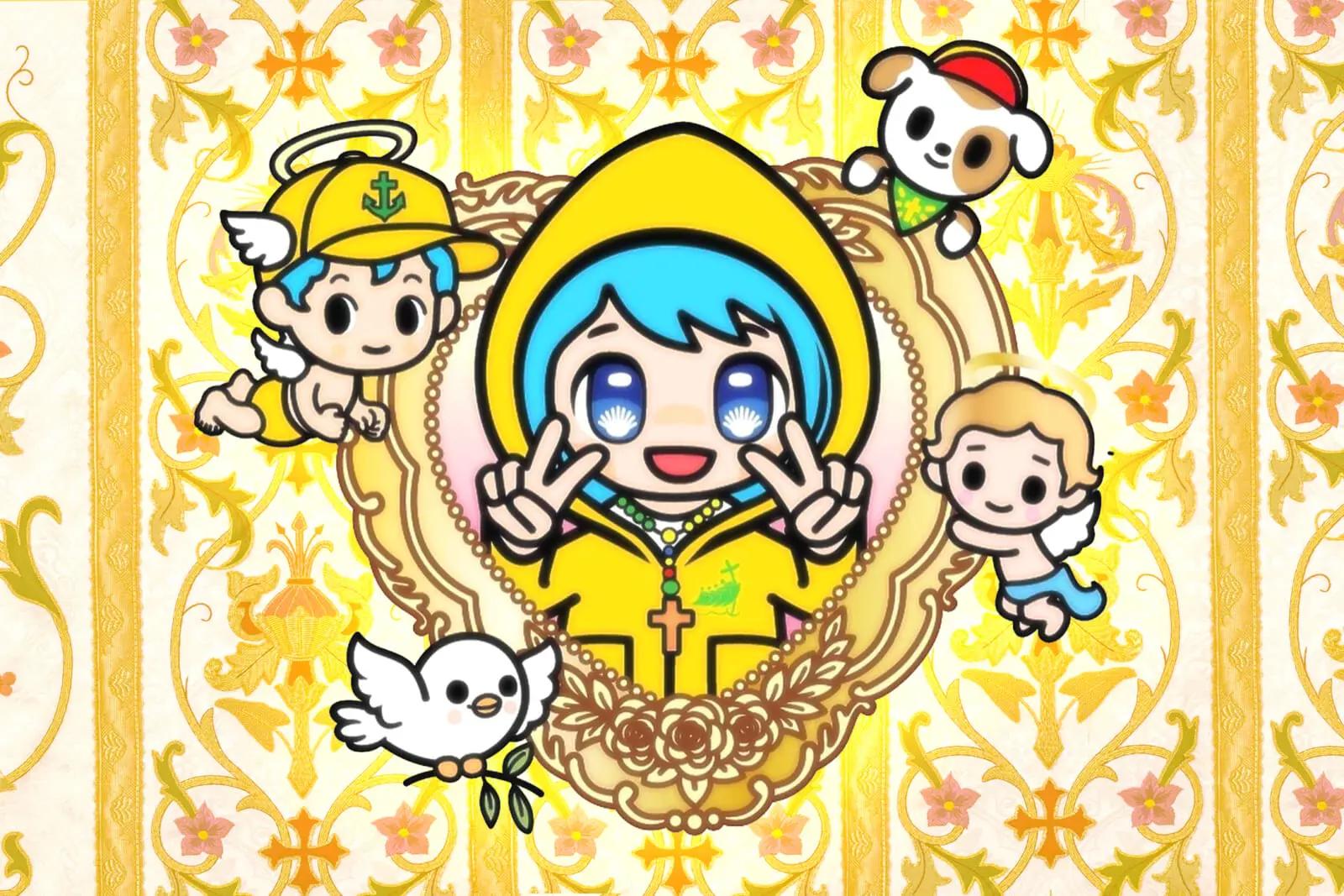
2025 will mark a Holy Year jubilee for the Catholic Church and to mark this special occasion they have just unveiled their first ever anime mascot: Luce.